




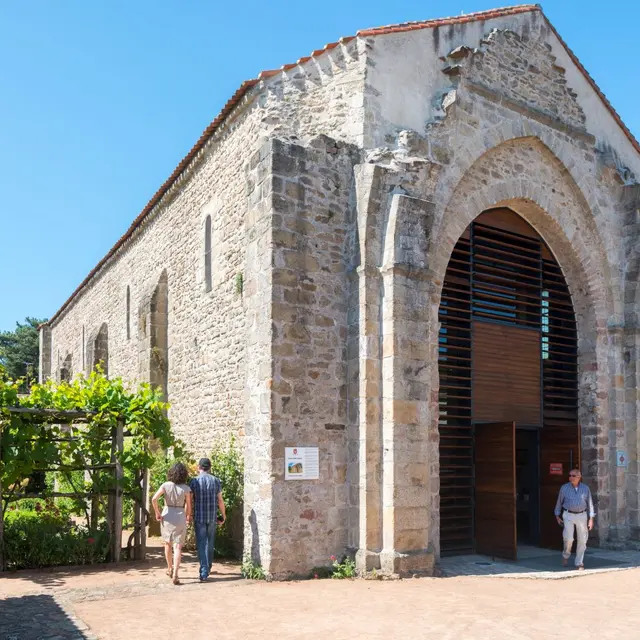
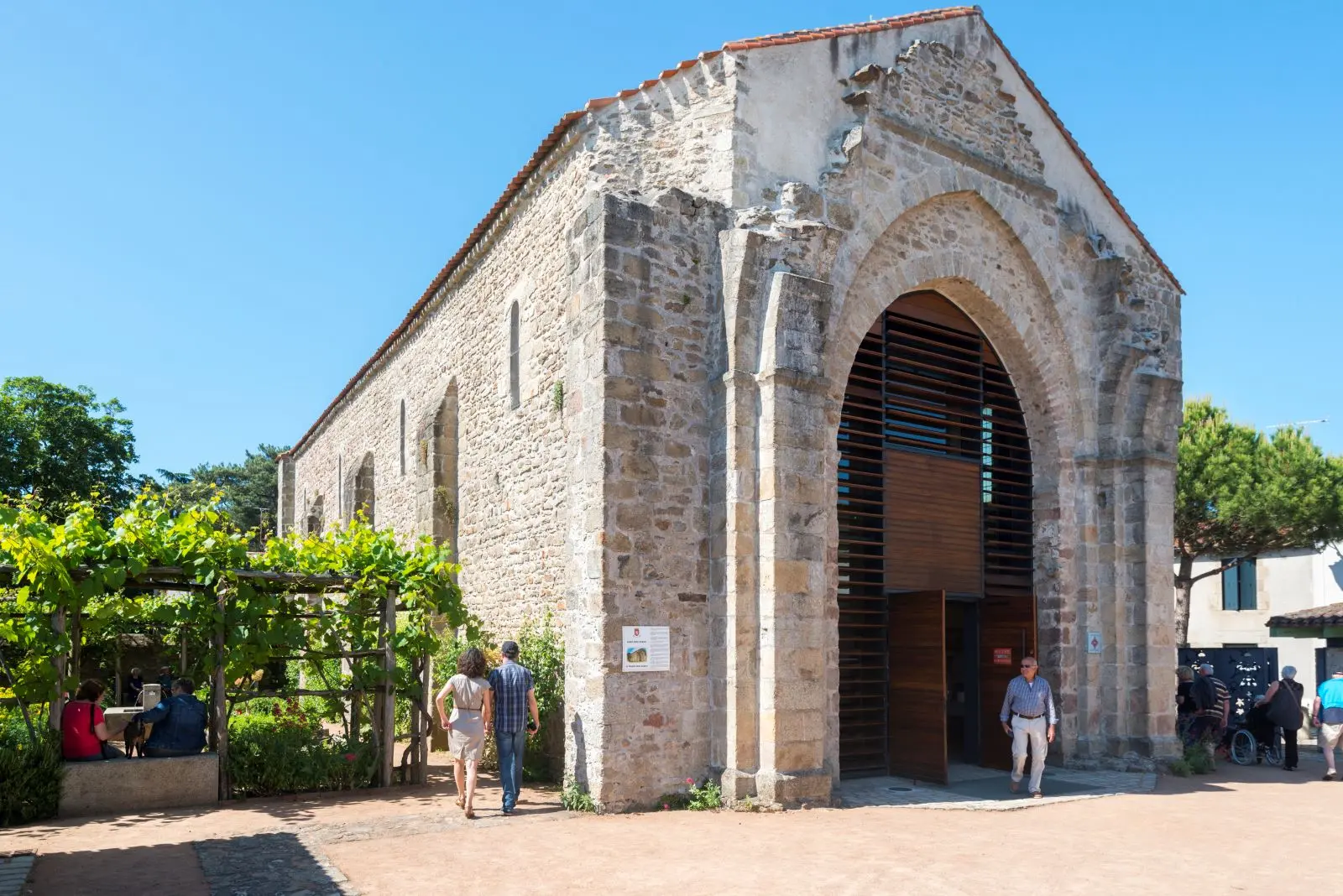
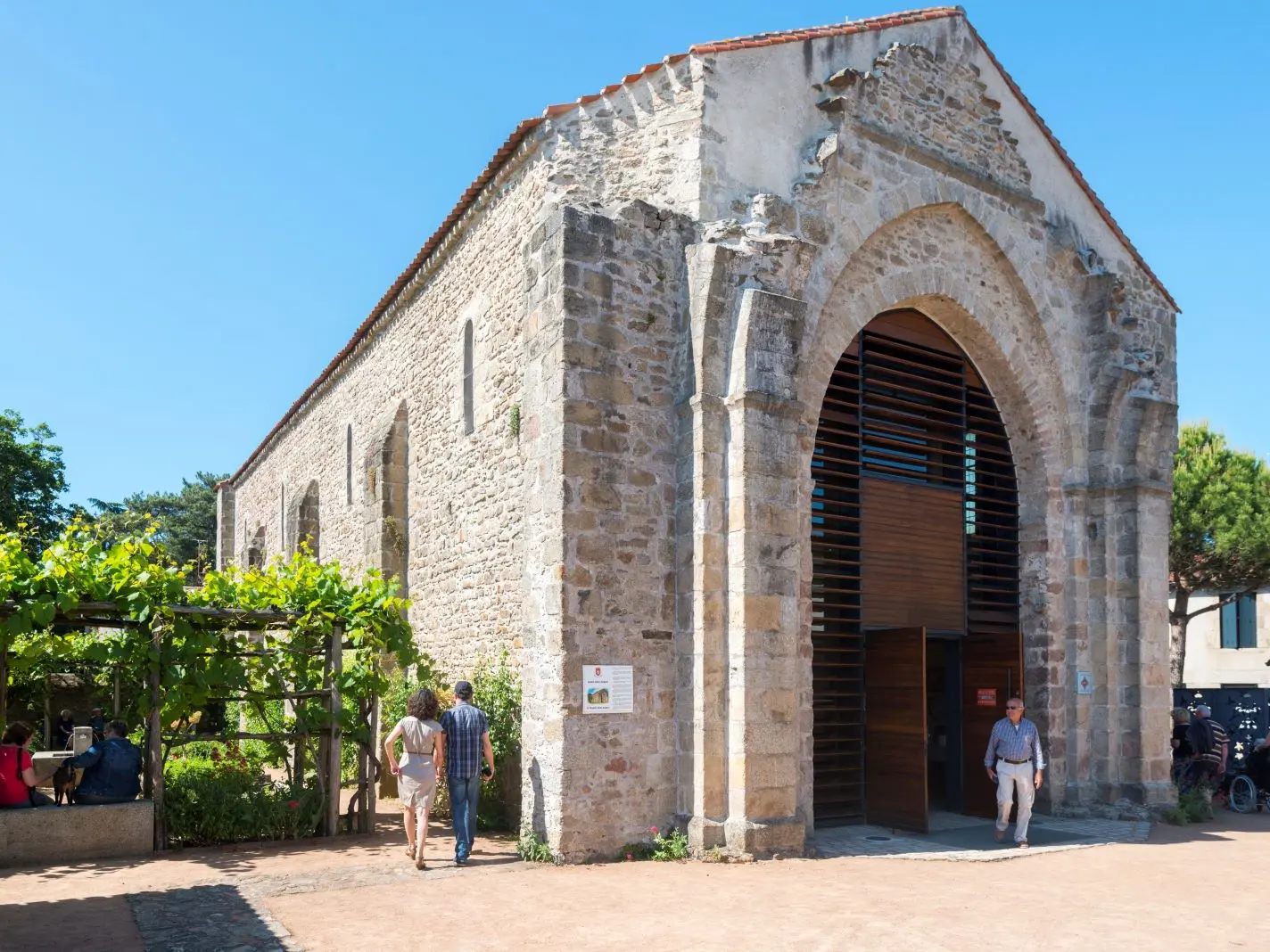
Saint-Jacques church, a symbolic place linking religion and culture.
A key stage on the pilgrimage route to Santiago de Compostela, the church of St James is dedicated to pilgrims, but not only that, as it has become a cultural venue for the Clisson Town Council.
A former Benedictine priory dating back to the 11th century, St Jacques church is part of the abbey of Saint Jouin de Marnes. Built under the patronage of Saint Jacques Le Majeur, this church is regularly visited by pilgrims to Santiago de Compostela, known as the Jacquets, a pilgrimage that took off in the 11th century with the reconquest of the Iberian Peninsula by the Christians from the Muslims. At that time, Clisson was on the Nantes-Parthenay route, and the church of Saint James was a stop-off point for pilgrims.
The Romanesque church of Saint Jacques dates from the late 12th century.
All that remains of the church is the nave, now converted into a cultural centre; the apse, transept and bell tower were destroyed in the 19th century.
During the revolutionary period, the church was not burnt down. In 1792, it was transformed into a decadal temple, where laws were proclaimed and marriages celebrated. The statues of saints were replaced by two goddesses painted on wooden planks, one holding scales and the other the book of the law.
Disused at the end of the 18th century, the chapel was long used as a warehouse for ragpickers.
In the 19th century, the apse and transept were destroyed.
It has been listed as a Historic Monument since 1941.
A medieval garden adjacent to the church is open to the public.
A former Benedictine priory dating back to the 11th century, St Jacques church is part of the abbey of Saint Jouin de Marnes. Built under the patronage of Saint Jacques Le Majeur, this church is regularly visited by pilgrims to Santiago de Compostela, known as the Jacquets, a pilgrimage that took off in the 11th century with the reconquest of the Iberian Peninsula by the Christians from the Muslims. At that time, Clisson was on the Nantes-Parthenay route, and the church of Saint James was a stop-off point for pilgrims.
The Romanesque church of Saint Jacques dates from the late 12th century.
All that remains of the church is the nave, now converted into a cultural centre; the apse, transept and bell tower were destroyed in the 19th century.
During the revolutionary period, the church was not burnt down. In 1792, it was transformed into a decadal temple, where laws were proclaimed and marriages celebrated. The statues of saints were replaced by two goddesses painted on wooden planks, one holding scales and the other the book of the law.
Disused at the end of the 18th century, the chapel was long used as a warehouse for ragpickers.
In the 19th century, the apse and transept were destroyed.
It has been listed as a Historic Monument since 1941.
A medieval garden adjacent to the church is open to the public.