




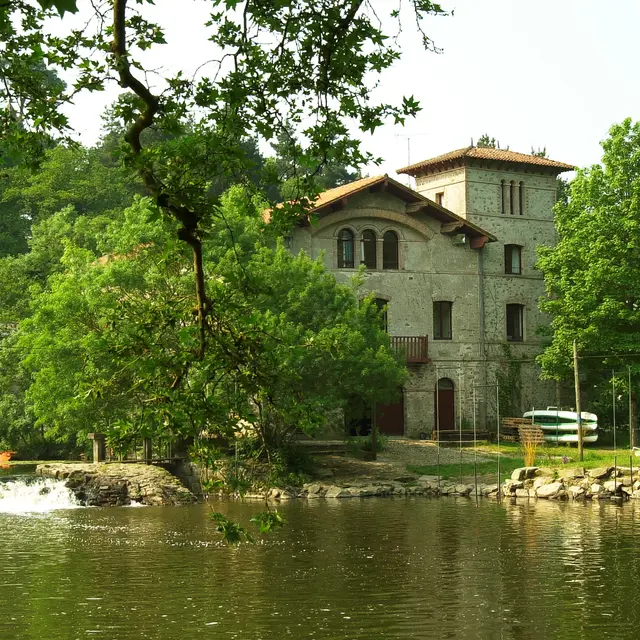
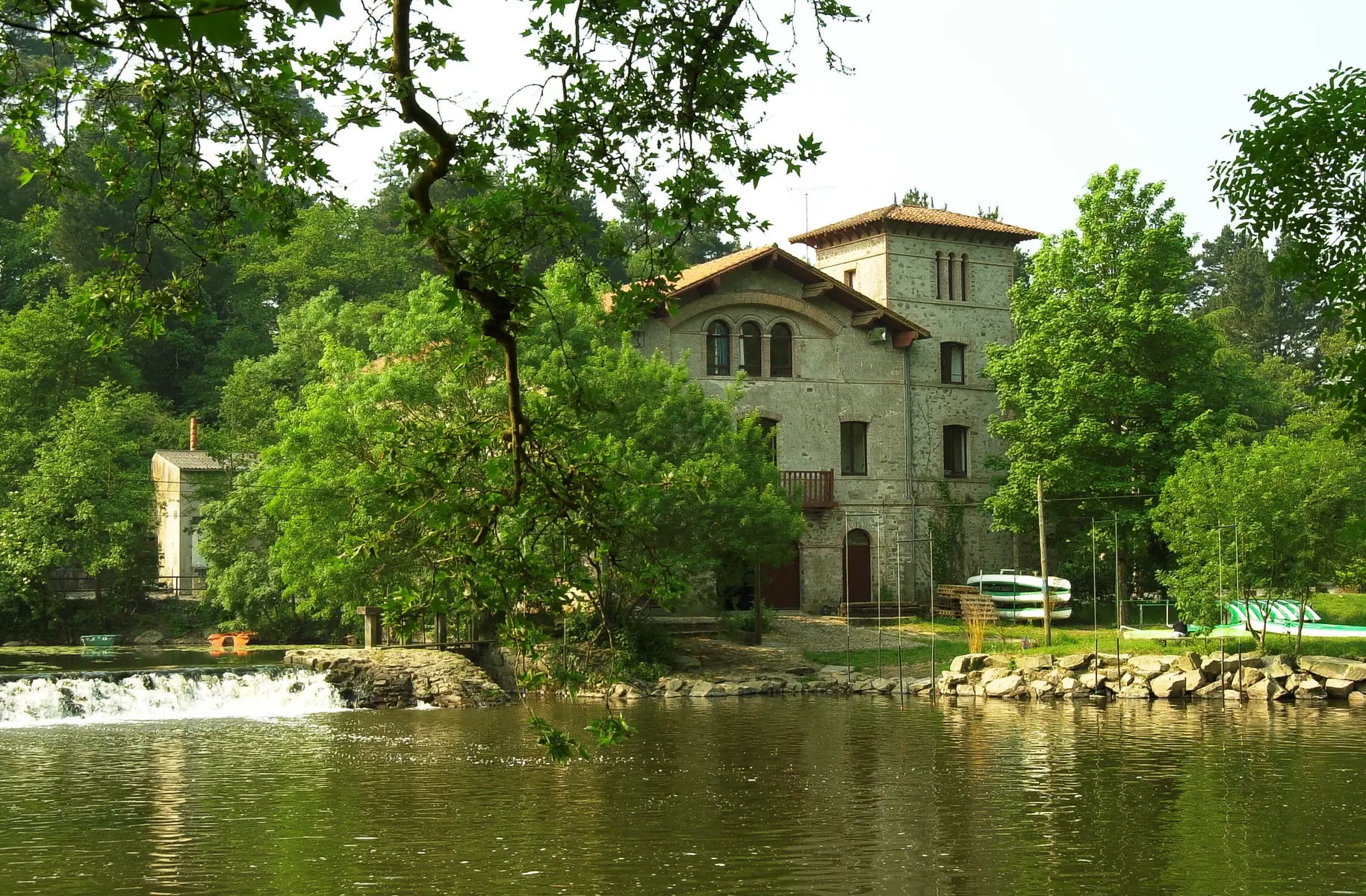
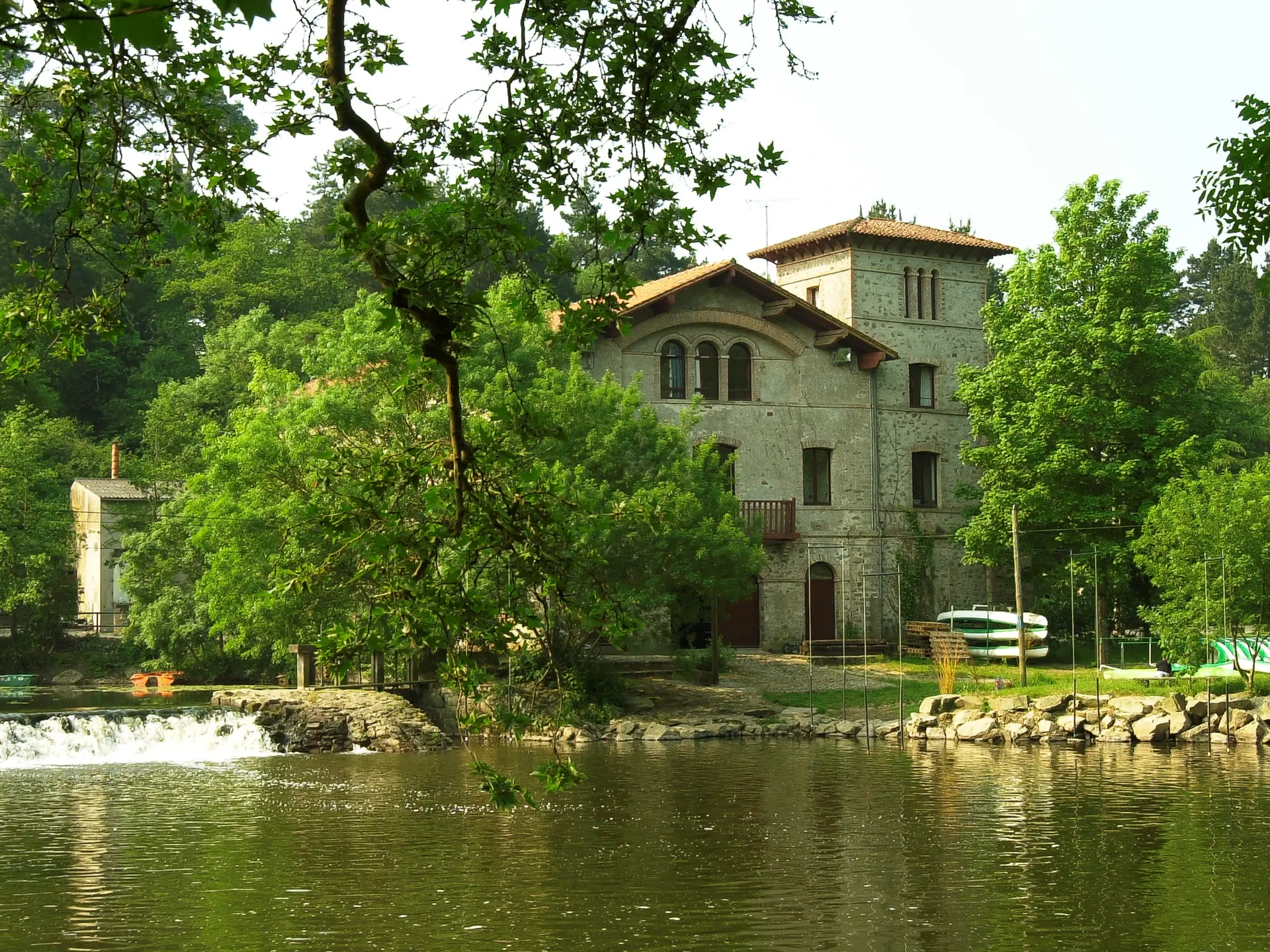
A mill with Italianate architecture
This flour mill is of very ancient origin, and was first mentioned in 1634.
The mill was bought in 1821 by Baron Lemot's son, who enlarged it and imbued it with the style of Italian architecture: round-headed windows surrounded by "chantignoles", low-pitched roofs overhanging and covered with round tiles, loggias and openwork galleries, balconies and railings in brick clerestory are directly borrowed from rustic Italian houses. It is one of the jewels of Clissonnais architecture.
From 1890 to 1915, the mill became an electricity generating plant to supply Clisson's lighting, before being converted into a chamois factory after the First World War.
Today, it houses the Clisson canoeing and kayaking centre.
The mill was bought in 1821 by Baron Lemot's son, who enlarged it and imbued it with the style of Italian architecture: round-headed windows surrounded by "chantignoles", low-pitched roofs overhanging and covered with round tiles, loggias and openwork galleries, balconies and railings in brick clerestory are directly borrowed from rustic Italian houses. It is one of the jewels of Clissonnais architecture.
From 1890 to 1915, the mill became an electricity generating plant to supply Clisson's lighting, before being converted into a chamois factory after the First World War.
Today, it houses the Clisson canoeing and kayaking centre.