



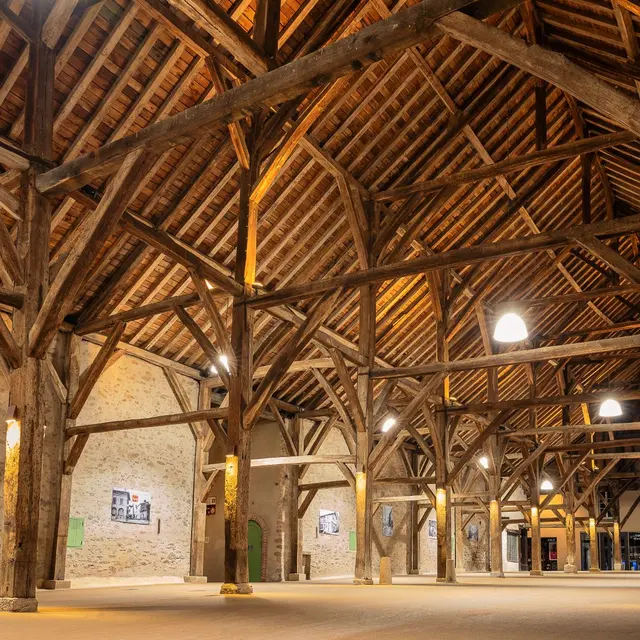
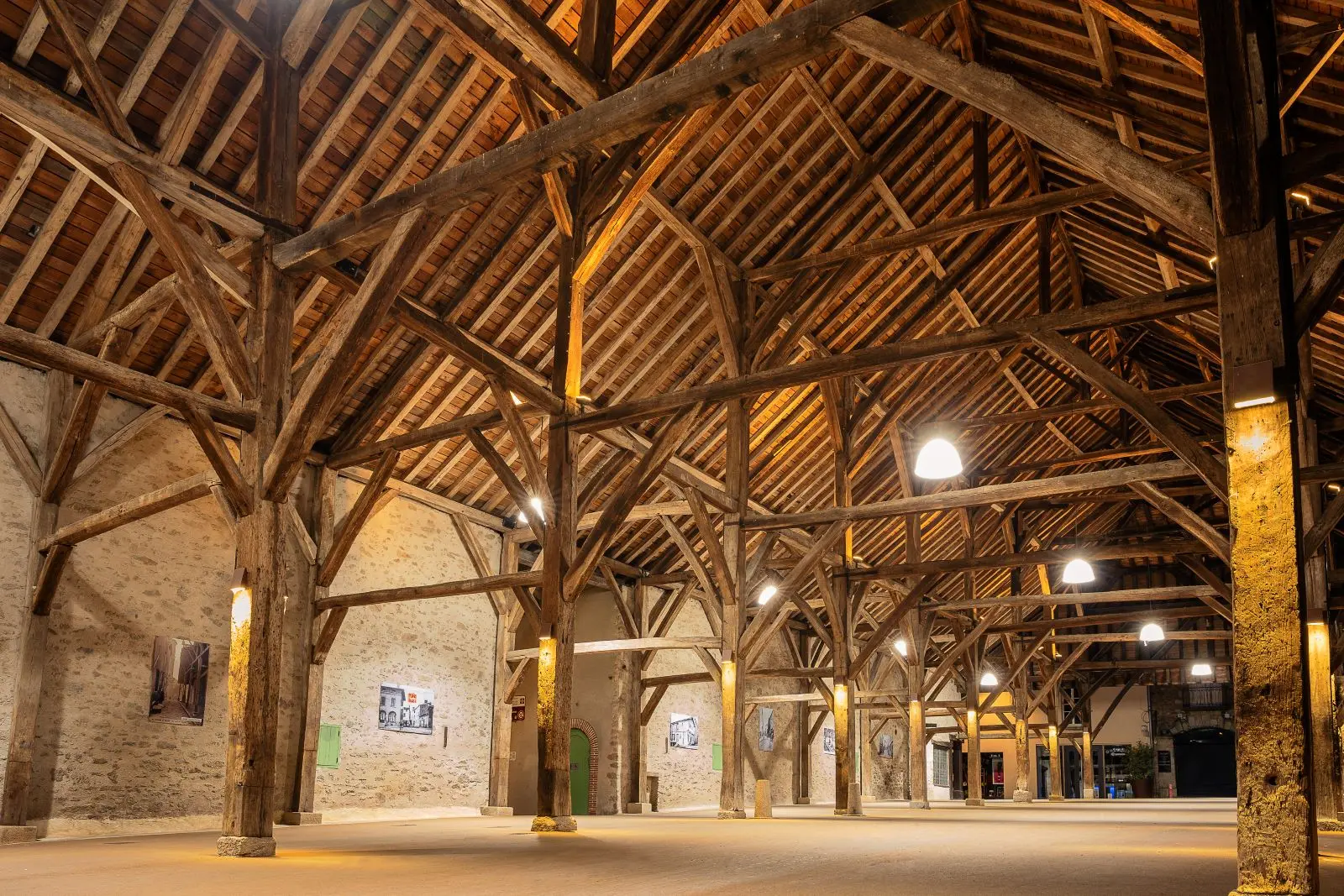
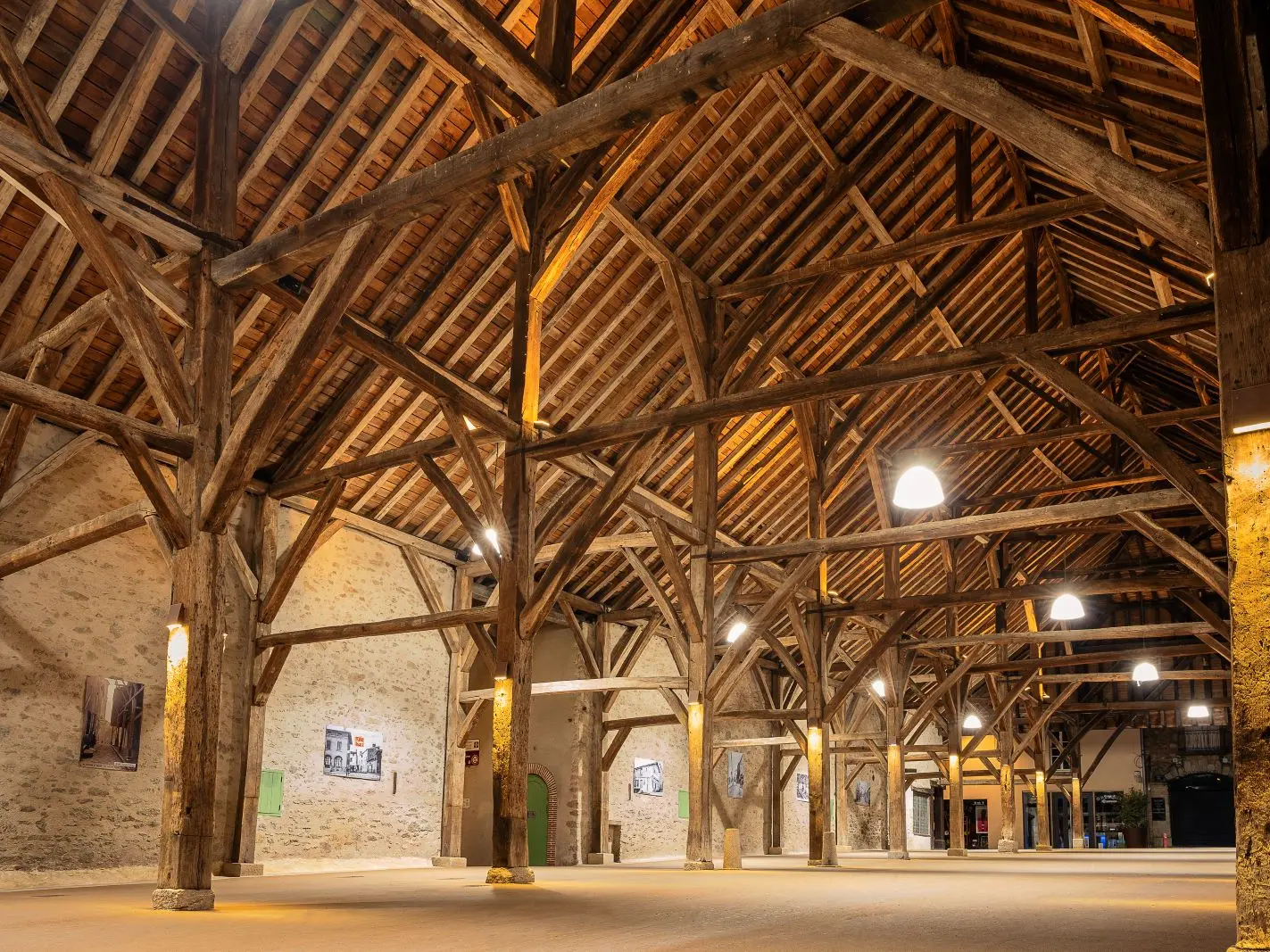
The 14th-century wooden covered market in Clisson is one of the oldest in France.
The Halles are an essential part of the town of Clisson.
The origins of the Halles de Clisson can be traced back to the medieval tradition of market towns, where trade was the backbone of economic and social life. From the Middle Ages onwards, Clisson, located at a strategic crossroads between Brittany, Anjou and Poitou, developed a major trading activity. The market halls, which belonged to the lord of the manor, became a central location for trading grain, livestock and local produce, as well as for exchanging information and collective decisions. Dating back to the 14th century, these halls had a number of activities. From a court of justice to a place of protection for armies during the Vendée Wars, it was also a place to welcome the faithful for religious festivals.
Today, this majestic structure, made of oak, fir and chestnut, houses the markets every Tuesday and Friday morning, as well as the town's events.
The origins of the Halles de Clisson can be traced back to the medieval tradition of market towns, where trade was the backbone of economic and social life. From the Middle Ages onwards, Clisson, located at a strategic crossroads between Brittany, Anjou and Poitou, developed a major trading activity. The market halls, which belonged to the lord of the manor, became a central location for trading grain, livestock and local produce, as well as for exchanging information and collective decisions. Dating back to the 14th century, these halls had a number of activities. From a court of justice to a place of protection for armies during the Vendée Wars, it was also a place to welcome the faithful for religious festivals.
Today, this majestic structure, made of oak, fir and chestnut, houses the markets every Tuesday and Friday morning, as well as the town's events.