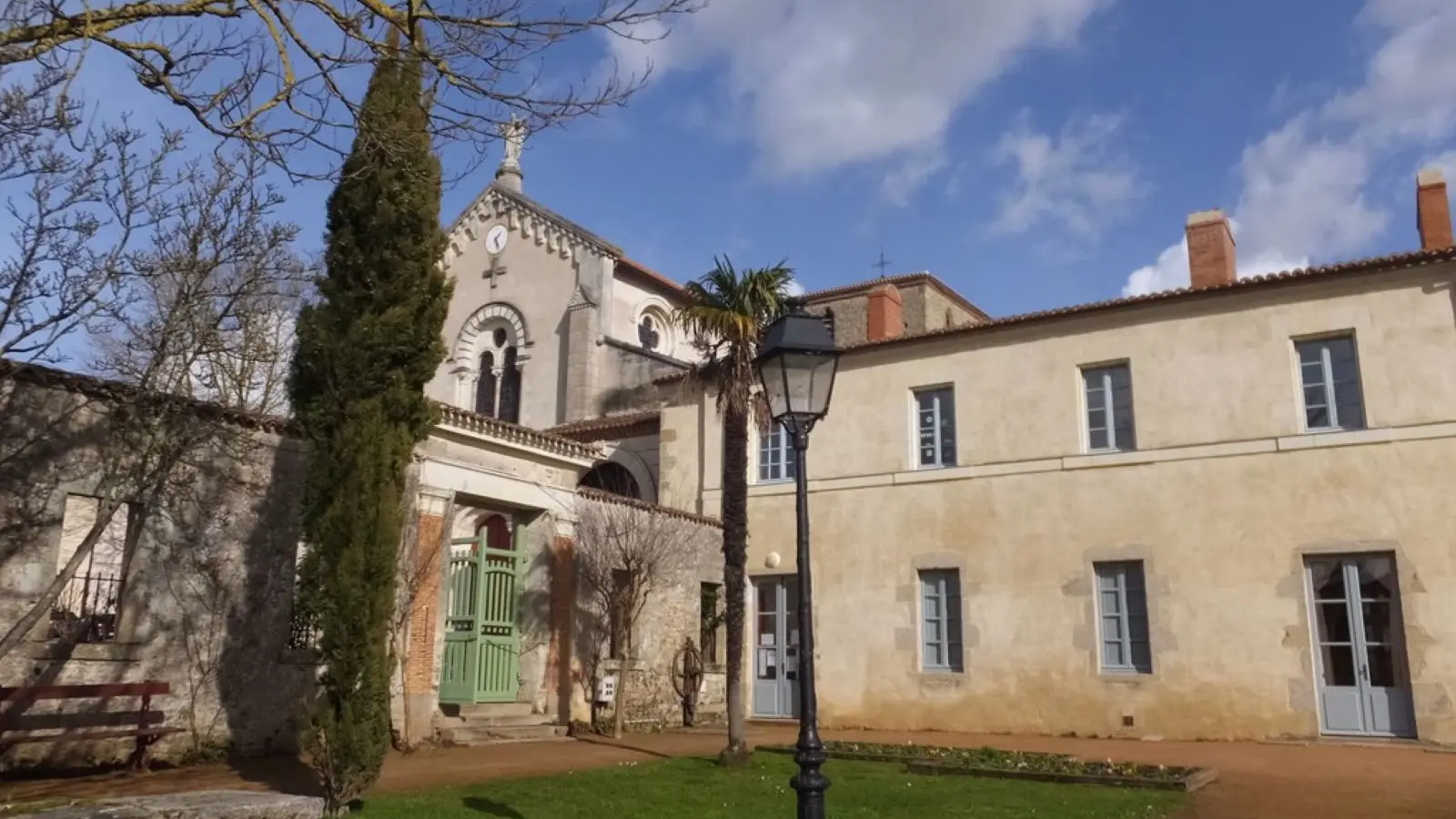
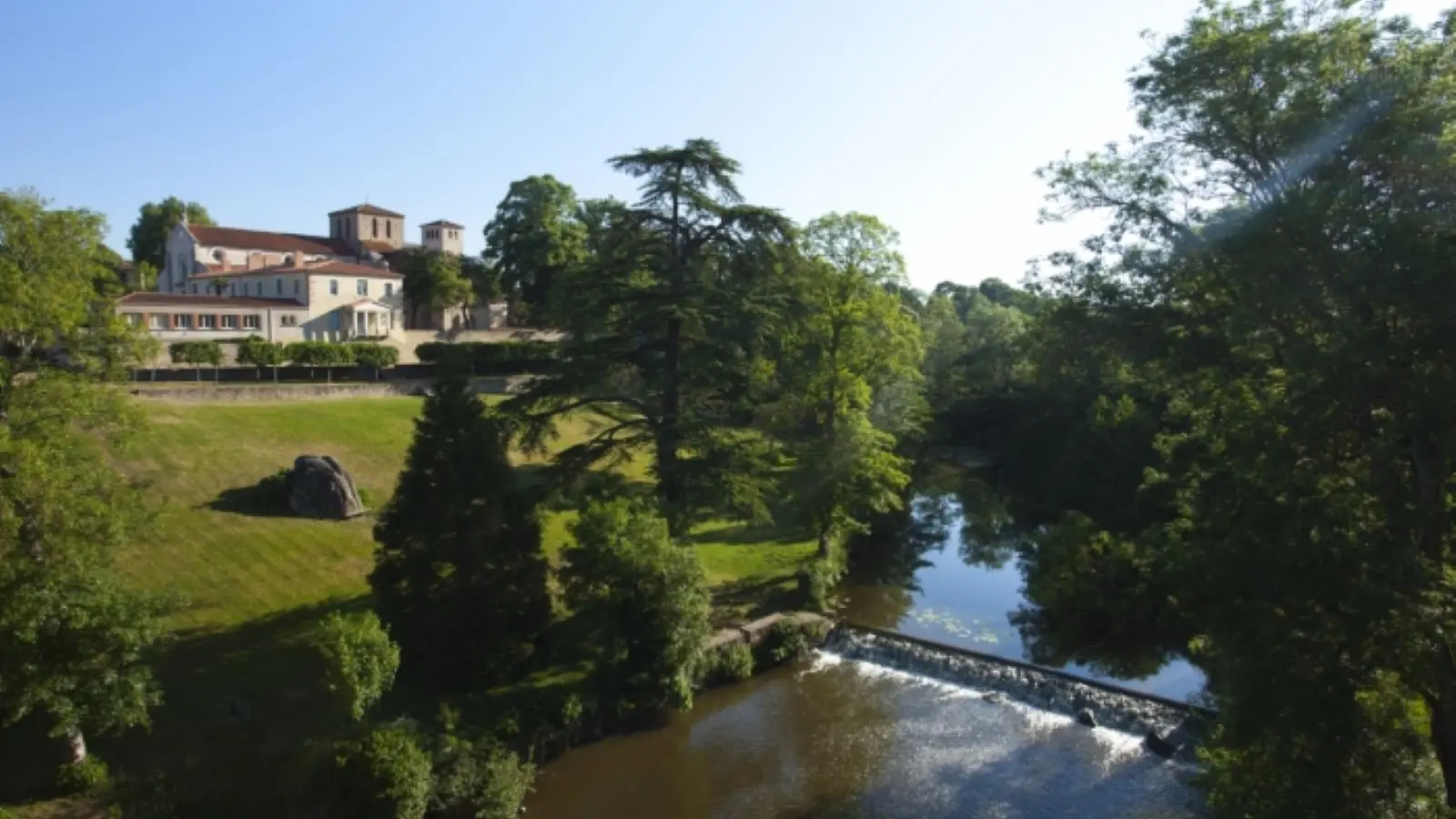
In Clisson, discover a unique place where history comes to life between the town's oldest church, a former fontevriste convent and a landscaped park with a bucolic feel.
Originally, La Trinité church was that of a Benedictine priory attached to the abbeys of Saint-Martin de Vertou and Saint-Jouin-de-Marnes. From the XIᵉ century, the site was occupied by Canons Regular of Saint Augustine, before reverting, probably in the XIIᵉ century, to the Benedictines of Saint-Jouin-de-Marnes.
In 1645, a community of Benedictine nuns settled there. They founded a college and built a convent inspired by the architecture of Fontevraud, which they occupied until the Revolution. Like much of Clisson, the site was hit hard in 1794 by the infernal columns.
When Notre-Dame church was rebuilt, the residents of the faubourg de la Trinité rallied to have their church restored too. The church then became a branch of the parish, hosting services and celebrations. Between 1867 and 1870, major restoration work nevertheless transformed the building, partly altering its original character.
The oldest church in Clisson, the Trinité is part of a remarkable heritage complex alongside the former fontevrist convent, whose architecture bears witness to successive changes from the XIIᵉ to the XIXᵉ century. Heavily damaged during the Vendée wars, the conventual buildings were partly refurbished in the XIXᵉ century by Jacques-Charles Valentin.
Nearby, the Garenne Valentin park invites you to take a stroll. More intimate than Garenne Lemot, this 4-hectare landscaped park captivates visitors with its bucolic atmosphere and meticulous views. It is home to an astonishing monumental factory: the Pavillon des Rochers, a real curiosity on the site.
The Trinité church is currently being restored, and can be seen from the outside. Take the opportunity to stroll through the Garenne Valentin park and appreciate the rich heritage and landscape of this unique site in Clisson.